Sure! Here’s a role play scenario of multicultural mediation:
Scenario: Resolving a Conflict in a Multicultural Workplace
Characters:
1️⃣ Maria – A Latina employee
2️⃣ Ahmed – A Middle Eastern employee
3️⃣ Sarah – A mediator
Scene: Conference room in a workplace
[Enter Maria and Ahmed, both looking frustrated]
Maria: Ahmed, I can’t believe you said that during the meeting. It was offensive and disrespectful!
Ahmed: Maria, I didn’t mean to offend you. In my culture, direct communication is valued, and I didn’t realize it would be interpreted that way.
[Enter Sarah, the mediator]
Sarah: Hello, Maria and Ahmed. I heard there was an issue. Can you both explain what happened?
Maria: Ahmed made a comment that I found offensive. It felt like he was attacking me personally.
Ahmed: I apologise, Maria. In my culture, we tend to be more direct in expressing our opinions. I didn’t mean to attack you personally.
Sarah: Thank you both for sharing your perspectives. It’s important to understand each other’s cultural backgrounds to avoid misunderstandings. Ahmed, while being direct is acceptable in your culture, it’s important to consider the impact it may have on others in a multicultural workplace.
Ahmed: I understand now. I should have been more mindful of how my words could be interpreted.
Sarah: Maria, it’s important to communicate your feelings when someone says something offensive. Ahmed may not have been aware of the impact of his words on you. Open dialogue is key to resolving conflicts.
Maria: Thank you, Sarah. I should have expressed how I felt instead of getting defensive right away.
Sarah: Now that we have a better understanding, let’s find a solution. Ahmed, can you apologize to Maria for any unintended offense?
Ahmed: I sincerely apologise , Maria. It was never my intention to offend you.
Maria: Thank you, Ahmed. I appreciate your apology.
Sarah: Great progress! Moving forward, let’s establish some guidelines for effective communication and cultural understanding in the workplace.
[The role play continues with Sarah facilitating a discussion on establishing guidelines for effective communication and cultural understanding in the workplace.]
In multicultural mediation, the focus is on resolving conflicts that arise due to cultural differences and diversity in a workplace or community setting. Here are some key aspects of multicultural mediation:
Multicultural mediators are trained to be sensitive and knowledgeable about different cultures, traditions, and communication styles. They understand that cultural differences can lead to misunderstandings and conflicts, and they work to bridge those gaps by promoting understanding and respect.
The goal of multicultural mediation is to facilitate the resolution of conflicts that arise from cultural differences. Mediators create a safe and neutral space for individuals to express their concerns and emotions. They help parties involved in the conflict to communicate effectively, understand each other’s perspectives, and find mutually agreeable solutions.
Multicultural mediators remain neutral and unbiased throughout the mediation process. They do not take sides or favor any particular cultural group. Their role is to facilitate communication, encourage empathy, and guide the parties towards finding a resolution that respects the cultural values and needs of all involved.
Effective communication is at the core of multicultural mediation. Mediators encourage open and respectful dialogue, ensuring that each party has an opportunity to express their thoughts and feelings. They help participants to actively listen and understand each other’s viewpoints, promoting empathy and fostering a sense of shared understanding.
Multicultural mediators possess cultural competence, which means they have the knowledge, skills, and attitudes necessary to work effectively with individuals from diverse cultural backgrounds. This includes understanding cultural norms, values, and communication styles, as well as having the ability to adapt their approach to meet the needs of different cultures.
Beyond resolving conflicts, multicultural mediation aims to build bridges and promote cultural integration and harmony. Mediators encourage participants to appreciate and celebrate their differences, fostering an inclusive and supportive environment where cultural diversity is valued.
Multicultural mediation plays a crucial role in creating inclusive and harmonious workplaces and communities where individuals from different cultural backgrounds can work together effectively and respectfully. By addressing conflicts that arise from cultural differences, mediation helps to foster understanding, collaboration, and a sense of unity among diverse individuals.
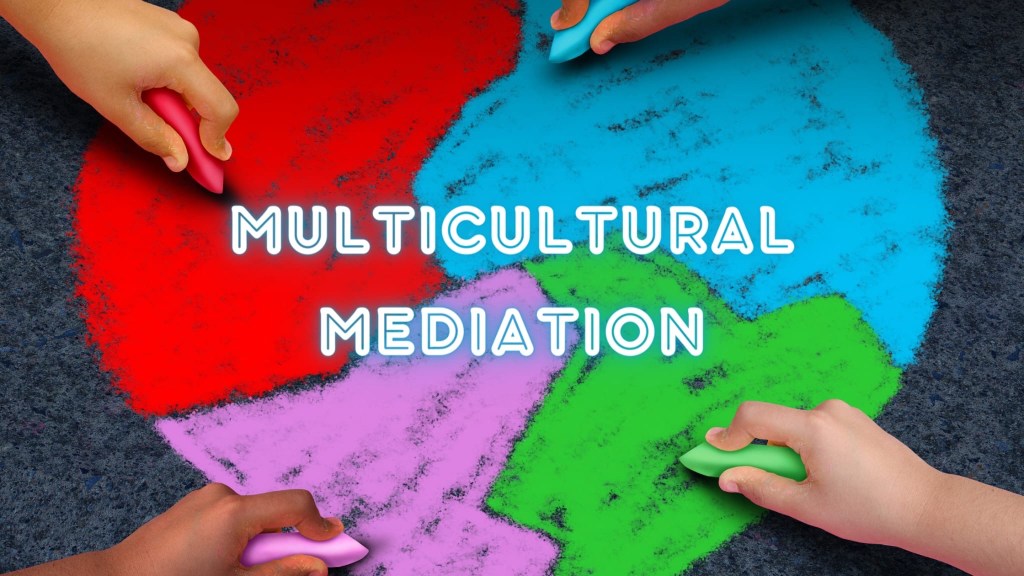
👆 We are developing scenarios for multicultural mediators as part of ACTIVITY 2. Follow our website to stay informed about our work. All materials are free to download. More scenarios will be available 🔜
 AUTPOST ACADEMY - RESEARCH AND TRAINING CENTRE