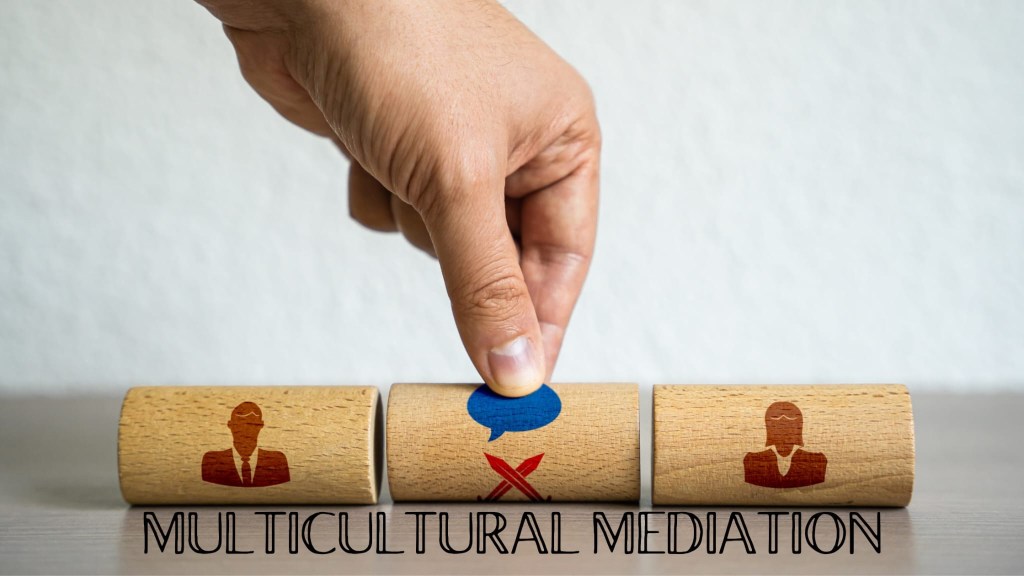
Multicultural mediation matters nowadays for several reasons:
In today’s interconnected world, people from diverse cultural backgrounds frequently interact and collaborate. Multicultural mediation plays a crucial role in facilitating effective communication, understanding, and resolving conflicts that may arise due to cultural differences. It helps promote collaboration, cooperation, and harmony in multicultural settings.
Many societies are becoming increasingly diverse, with people from different cultures, ethnicities, and backgrounds living and working together. Multicultural mediation helps address the challenges that arise from this diversity, such as misunderstandings, biases, and conflicts. It promotes inclusivity, respect, and appreciation for different cultures, fostering social cohesion and harmony.
Cultural differences can often lead to conflicts, whether at an individual, community, or international level. Multicultural mediation provides a framework and techniques for resolving conflicts that arise due to cultural misunderstandings or clashes. It helps parties involved in the conflict to understand each other’s perspectives, find common ground, and reach mutually acceptable solutions.
Multicultural mediation is closely linked to social justice and equality. It recognizes the importance of giving all individuals and communities an equal voice and ensuring that their cultural rights and identities are respected. Through mediation, power imbalances can be addressed, and marginalized groups can be empowered to participate actively in decision-making processes.
In today’s globalized economy, multicultural mediation is essential for successful business interactions and international relations. It helps businesses navigate cultural differences when negotiating contracts, resolving disputes, and building relationships with partners from different cultures. Similarly, in international diplomacy, multicultural mediation is crucial for resolving conflicts and fostering peaceful relations between nations.
Multicultural mediation is relevant in educational and healthcare settings. In schools and universities, it promotes inclusive learning environments where students from diverse backgrounds feel valued and understood. In healthcare, it helps bridge cultural gaps between healthcare providers and patients, ensuring effective communication, empathy, and culturally sensitive care.
Multicultural mediation not only helps resolve conflicts but also plays a vital role in preventing conflicts from escalating. By addressing cultural differences, promoting dialogue, and fostering understanding, mediation can help prevent misunderstandings and tensions from turning into full-blown conflicts. It contributes to the promotion of peace, stability, and social cohesion.
Multicultural mediation matters nowadays because it enables effective communication, resolves conflicts, fosters social cohesion, promotes social justice and equality, supports successful business interactions, facilitates international relations, enhances education and healthcare, and contributes to conflict prevention. Embracing cultural diversity and employing multicultural mediation skills are essential for building inclusive and harmonious societies in our increasingly interconnected world.
Follow our blog to learn more about our latest projects 🇮🇪🇪🇺
 AUTPOST ACADEMY - RESEARCH AND TRAINING CENTRE